by John D. Carrion
Abstract
The LGBTQ+ choral movement began in 1975 and has expanded to nearly 400 choirs around the world (GALA Choruses 2021). In the nearly half-century since their inception, LGBTQ+ choirs have participated in political activism to varying degrees. This research explored whether the act of musicking, the all-encompassing nature of creating music termed by Small (1998), leveraged relationships, political opportunities, emotions, and situational framing to create and sustain a social movement. This research was comprised of interviews of past and current members of the London Gay Men’s Chorus (LGMC), formed in 1991. Engaging traditional social movement literature, performance literature, and gender and sexuality literature to inform both the methodology and the analysis, I sought to understand why gay men joined a choir without a political intent, but then emerged as insurgents towards creating and sustaining a social movement. How do musicking and identity combine as catalyst for collective action? How do chorus member relationships manifest bonds of solidarity that create kindling for group identity, group activity, and political activism? Ultimately, participants intimated that a shared marginalized identity created both a physical and emotional vulnerability framed around heteronormativity. I found that these vulnerabilities were harnessed and selectively shared via the act of musicking to foment a collective identity that ultimately sought a change in opinions for both the members and the audience.
Introduction
On June 13, 2016, the heart of London’s LGBTQ+ neighborhood was filled with an estimated fifteen thousand people at a vigil for the victims at the LGBTQ+ Pulse Nightclub in Orlando, Florida (The Guardian, 2016; see Figure 1). After a moment of silence, members of the London Gay Men’s Chorus (LGMC) sang Bridge Over Troubled Water by Simon and Garfunkel as a protest against homophobia. Yet, 48 hours earlier, the LGMC had been performing their celebratory 25th anniversary concert. Founded in 1991, the LGMC was an amateur chorus – a hobby or pastime opportunity for primarily gay men to regularly sing together outside of their professional lives. This raised the question of why an amateur chorus had suddenly taken center stage at the vigil for the Pulse victims.
Small (1998) posited that the act of musicking best described the complexity of the intricate series of relationships that creating music involved “and it is in those relationships that the meaning of the act lies. They are to be found not only between those organized sounds which are conventionally thought of as being the stuff of musical meaning but also between the people who are taking part...” (Small, 1998, p. 13). I considered LGMC in terms of musicking – the relationships, the rehearsals, the trips, the concerts, and the never-ending etcetera involved in the all-encompassing nature of making music. I considered whether musicking created, developed, and sustained, as several participants noted, the desire to be “part of something bigger,” even though that was never the original intention. I further explored whether musicking and identity combined as a catalyst for collective action; whether musicking created the conditions for members of the LGMC to attempt to influence public opinion related to sexuality-based oppression; and whether the LGMC constituted a social movement at all.
Social movements have commonly centered around traditional forms of contentious collective action and aggressive confrontation (e.g., protests, marches, boycotts, sit-ins). In this present study, I have posited that musicking in the LGMC has harnessed both an implicit and explicit heteronormative vulnerability that incited this movement via intentional, inclusive, and resonant framing. Musicking then evolved into a mechanism for collective action, resource mobilization, and sustained activity because its creation was borne from, and continuously based in, this vulnerability. In an effort to communally redistribute control of societal cultural patterns, musicking was additionally used as a means of framing support for the movement’s mission by being selectively shared as an unthreatening form of soft diplomacy via musicking as protest. I have concluded that musicking did create the conditions for social movements because musicking was predicated not on aggressive confrontation but instead on harmonious shared humanity.
.png)
Photo: The Guardian 2016
Figure 1: London Gay Men’s Chorus (center in blue)
Orlando Pulse Vigil
Old Compton Street, London
13 June 2016
Review of Literature
Striking the Right Chord: A Harmonious Approach to Social Movements
“A social movement is a loosely organized, sustained effort to promote or resist change in society that relies at least in part on noninstitutionalized forms of collective action” (McAdam and Boudet, 2012, p.56). This foundational definition contained three main points that transformed collective action into a movement. First, the sustained effort of collective action was essential because it set it apart from singular moments in time and instead demonstrated a consistent and intentional endeavor. Second, its relationship to societal change had to challenge or champion systems, traditions, or societally accepted ways of being. Finally, noninstitutionalized methods of collective action were essential because they represented agency in spite of formalized societal structures and demonstrated a purposive choice to change one’s own life outcomes (Touraine, 1985). This baseline definition allowed for a more measured approach to understanding social movements via three relevant categories: resource mobilization, political opportunities, and emotional and framing techniques.
McCarthy and Zald (1977) examined the resources engaged for social movement campaigns via what they termed resource mobilization. This branch primarily considered the use of material, organizational, structural, network, cultural, and human resources that contributed to social movement campaigns and contended that human resource mobilization required a dense network in order to support recruitment and quotidian activity (Granovetter, 1973; McAdam, 1996; della Porta, 2015). Granovetter, in particular, noted the existence of strong ties and weak ties, which played different roles in promoting and sustaining collective action. Counterintuitively, Granovetter concluded that while strong ties might introduce insurgents to a campaign, weak ties enabled both the motivation to join collective action and the safety in numbers required to engage in it. Echoed by Tufekci (2017), weak ties became fundamental to collective action because they expanded networks, provided a diversity of skills, and rapidly grew the number of insurgents.
Researchers have defined political process theory as the political environment in which movements have formed through three main elements (Tilly, 1995; McAdam, 1999; Kriesi, 2008). First, an insurgent consciousness develops within a group that believes it has suffered a grave injustice (Marx, 2000; Thompson, 2013 [1963]; McAdam, 1999). This consciousness brings about mobilizing means and methods described in resource mobilization theory (McCarthy and Zald, 1977). Finally, political opportunities emerge. Tilly (1995), McAdam (1996), and Tarrow (2011) described these opportunities in terms that included catalytic events, relationships with elites, degrees of repression, shared learning among movements, and changes in public opinion.
To capture these human complications, scholars have explored culturally resonant framing devices that serve both as stimulus and support for sustained insurgent consciousness and mobilization. Benford and Snow (2000) described frames as contextual “processual phenomena that implied agency and contention at the level of reality construction” (p. 614) and categorized frames according to problem identification, flexibility, inclusivity, and resonance. These framing devices helped to diagnose problems, inculcate the importance of frames, define inclusion, and motivate insurgency. Within these frames, insurgents developed urgency, attachment, and familiar narratives that contextualized their involvement (Polletta, 2006). Framing was therefore essential for personalizing grievances, removing abstraction, and presenting issues to adversaries (Ryan and Gamson, 2008).
Goodwin, Jasper, and Polletta (2004) argued that emotions are central to human action and therefore play an important role in collective action. Anger and discontent were often associated with movement emergence. The authors, however, also examined joy, particularly the joy of unexpected victory, as a source of cognitive liberation that encouraged continued participation. Emotions functioned alongside framing processes to support recruitment, mobilization, continuity, and demobilization (Jasper, 2009). Joy also contributed to communal belonging through Turner’s concept of communitas, which fosters collective identity and duty (Turner, 2012).
McAdam, McCarthy, and Zald (1996) combined these three branches into an amalgamated framework that allows scholars to analyze overlapping dimensions of social movements. Tarrow (2011) illustrated this intersection (see Figure 2). This blended approach remained useful because it connected theoretical structure with the lived stakes of movements, particularly as articulated in “new” social movement scholarship. Touraine (1985) defined social movements as those whose stake was “the social control of the main cultural patterns” (pp. 754–755). Touraine emphasized normativity and hegemony rather than mechanics alone. Analysis of movement missions further enabled consideration of collective identity and how identities have interacted in pursuit of those missions. Melucci (1996) defined collective identity as an interactive and shared process constructed through repeated relational activation. These frameworks were essential because social movements were modes of human agency and therefore required attention to both process and people.
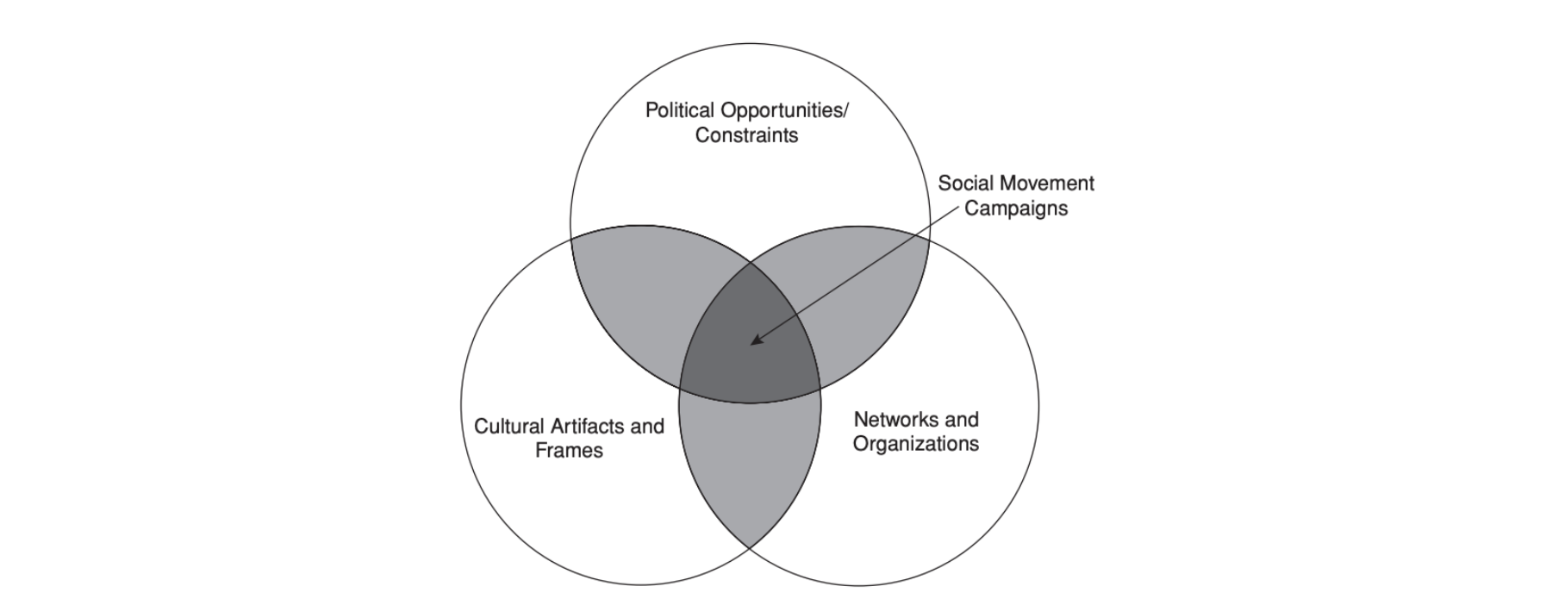
Figure 2: The Intersecting Elements of Social Movements
Music in Protest versus Musicking as Protest
Scholars have largely focused on music used within protest contexts (Rosenthal and Flacks, 2011; Street, 2012; Bobetsky, 2014; Garvin, 2016). There was comparatively less literature on musicking as protest, where musicking itself constituted the primary form of collective action. Musicking as protest aligns with Small’s (1998) definition of musicking, in which he emphasized interactions, relationships, and supporting activities within a musical activity. Paretskaya’s (2015) analysis of the Solidarity Sing Along demonstrated this approach but focused on labor conflict rather than cultural patterns or identity. Roy (2010) argued that the sociologically interesting question concerned how musical meaning was achieved. Eyerman (2002) further demonstrated how choral musicking functioned as identity-based mobilization by fostering belonging, visibility, continuity, and resilience. Through musicking as protest, movements have created meaning via resonant frames that shaped recruitment, mobilization, and mission.
Methodology
Recruitment, and Sampling
I chose the LGMC for a few key reasons: motivationally, as former Chairman and a current member of the group, I experienced first-hand the personal shift from social group to political activity. As Maso (2003) mentions, researchers should carry “necessary subjectivity” that provides not only the passion for the work but also the initial impetus for the research questions. I therefore became interested in the causal conditions for this transformation and the resulting sociological value in explaining social movement activity. Practically, I chose this group because I had unique access to participants only available to current and past members. This allowed for exclusive research opportunities and data sources that may have been difficult for external researchers to access.
As the LGMC is an autonomous bounded group, the process of finding volunteers was relatively straightforward. To minimize personal bias, I attempted to ensure that neutrality was infused throughout the entire project. I recruited volunteers through an internal email system and via a members-only Facebook group. This prevented reliance solely on participants with whom I had a personal relationship and broadened potential participants from my personal contacts to all living past and present members (Taylor, 2011). This also allowed me to engage with multiple perspectives against my biases and preconceived impressions (Labaree, 2002). The final participant group (N = 15) included five singing members, five non-singing members (known as semitones), and five former members (known as alumni). While the singing members and semitones were randomly sampled, I systematically sampled the alumni to round out the entire participant group (Luker, 2008).
Research Design and Analytical Approach
I engaged in a singular movement case study for this research, as is the common primary analysis for social movement scholarship (McAdam & Boudet, 2012). Though the LGMC was the bounded group of the study, the ontological unit of analysis was the individual actor (Mason 2002). I chose interviews as the sole method of gathering data because, epistemologically, I sought opinions, feelings, individually created meanings, and a personal understanding of how musicking had transformed (or not) participants’ originally solely social mode of participation in the chorus to one with political intent (Mason 2002). An interview allows participants to speak for themselves and “allows for and encourages…comparison across contexts, situations, and kinds of people” (Lamont & Swidler 2014, p. 158) – which is particularly relevant for marginalized communities (Alcoff, 1991). I therefore present an interpretation and analysis of what participants think is relevant to the questions as per their own personal experiences (Becker, 1996). As the number of past and present members is extensive, a positivist representative sample was neither achievable nor a goal. Instead, I chose to engage in what Small (2009) identified as a case model in which, by design, each participant is considered an individual case – the compilation of which would provide a window into a subset of LGMC members.
Of particular note to this project is my positionality as former Chairman of the LGMC. This granted me an opportunity to become, as Collins (1986) termed an outsider-within. “Outsiders within occupy a special place – they become different people, and their difference sensitizes them to patterns that may be more difficult for established sociological insiders to see” (Collins, 1986, p. 29). This identity granted me exclusive benefits because it allowed me to conduct research by leveraging established trust by virtue of our shared identities and membership in the chorus (Ergun & Erdemir, 2009). This positionality, however, carried the potential for inhibited responses of participants because of my previous role as Chairman and personal bias towards reproducing my views in the final analysis (Labaree, 2002). To counterbalance these concerns, I approached the design and analysis inductively by creating research and interview questions for which there could be a range of answers (Luker, 2008). Additionally, the interviews – ranging from 44 to 78 minutes – were semi-structured to allow for a wide range of topics and in-depth responses (Luker, 2008; Weiss, 1994). I transcribed the interviews and coded them using an inductive coding technique that both reduced and complicated themes and sub-themes for each topic area (Coffey & Atkinson, 1996). The three main themes were: joining the chorus (insurgent consciousness), agreeing to participate in political elements of the chorus (collective action), and staying (or not) with the chorus (mobilization and demobilization). I then complicated the data by considering musicking’s role within each of these areas. This complication of data enabled me to layer my analysis in consideration of networks, emotions, and cultural frames towards collective action.
Ethical Considerations
Blee and Currier (2011) described a best-practice ethical approach as one that considers ethics proactively. Accordingly, I first tried to minimize the difference between me and the participants by focusing on my role as a current member and not focusing on my previous role of Chairman. This helped to level the interviewer/interviewee dynamic as a means of providing a comfortable and balanced interaction (McCorkel & Myers, 2003). Additionally, I anticipated that, by recounting personal stories, participants might display intense emotions, experience distress, or reveal intimate information involving mutual connections. I therefore stressed before and during the interviews that participants only needed to answer that with which they felt comfortable. This helped to inculcate trust with the participant, to ensure that the participant was at the heart of the interaction, and to prevent devolution of the interview into gossip. All video and audio files were stored on a private Dropbox to which I have sole access. To preserve confidentiality, all names used are pseudonyms and any potentially indefinable information has been cleared for use by the participant(s). All participants were required to complete a consent form that detailed the aims of the research, requested permission to record the interview, and explained how the material would be used.
Findings and Analysis
Harnessing Vulnerability Through Musicking: Political Opportunities
According to a first-hand written account from LGMC founding member Robert Offord (2017), the LGMC began within the setting of a social group called London Friend. In the late 1980s, both the HIV/AIDS epidemic and the Section 28 law were significant sources of trauma for the gay community. Section 28 stated that a local authority shall not (a) intentionally promote homosexuality or publish material with the intention of promoting homosexuality; (b) promote the teaching in any maintained school of the acceptability of homosexuality as a pretended family relationship (Great Britain. Local Government Act, 1988).
This law effectively bifurcated society and created a legal hierarchy of sexuality during a time of widespread societal homophobia (Burridge, 2004). The combination of these crises forced a vulnerability unto the UK’s LGBTQ+ population that was comprised of both exogenous and endogenous factors. Ultimately, this social group developed a consciousness of shared threats corresponding to their identity as gay men and allowed founding members to harness their shared vulnerable identities as an injustice frame. This injustice framing incited a continued consciousness that empowered collective action (Marx, 2000; Thompson, 2013 [1963]; McAdam, 1999).
In this new movement, the actors chose musicking to be the method for creating the conditions enabling societal and political change. As Offord stated:
I could clearly see that an in-yer-face gay choir could challenge so much of the fear and prejudice that [was] being whipped up […] It would be a direct, non-violent, cultural attack against the very heart of all the problems concerning our acceptance (Offord, 2017, pp. 12–13).
Participant Harvey, who joined in 1998, similarly noted the societal vulnerability of gay men at the time. The mere act, he said, of being out and performing as a gay group was deeply divisive and political: “we were all highly culturally politically charged ‘cause that was the environment. We were in an embattled situation… especially during AIDS” (Interview 1). Participant Oscar, who joined in 2011, also described LGMC’s reaction to the AIDS crisis: “we established our duty right there and then” (Interview 1).
Sharing Vulnerability Through Musicking: Inclusion and Emotional Framing
Participants expressed that the chorus’s commitment to musical inclusivity was a main factor in their longevity with the organization. Several participants highlighted the chorus’s “no audition for joining” policy. As participant Andrew noted, “not everybody in the chorus is a fantastic technical singer… It’s about the enjoyment and the passion for singing” (Interview 1).
As with Eyerman’s (2002) intervention, musicking created a shared safe space framed by belonging, equality, and connection within LGMC. Participant Oscar explained that he wanted to pass along “what the chorus has given me...the ability to be able to be absolutely proud of who I am.” All participants described intense positive emotional charge from their experiences, including acceptance, joy, pride, and passion (Goodwin, Jasper, & Polletta 2004). Participants also described musicking as emotionally exposing and vulnerable. Participants frequently cited songs associated with the Pulse vigil, particularly Bridge Over Troubled Water. Participant Keith described his experience: “there’s something in the lyrics… showing support to people who had been lost to no fault of their own… it hits deeply within your heart and your gut” (Interview 1).
Keith expressed that the song framed both his identity as a gay man and the vulnerability of his community, personalizing grievance and strengthening solidarity (Ryan & Gamson 2008). Resonant framing and emotion were also central to how the chorus garnered audience support. Participants described musicking as a way to share vulnerability through “soft diplomacy.” Participant Peter explained, “with a performance like the choir you can very easily and readily give people a sense of identity and fellowship with you” (Interview 1). This allowed the chorus to expand its external network of allies through shared humanity and compassion (Eyerman, 2002; Jasper, 2009; Touraine, 1985).
Human Resource Mobilization Through Musicking: Identities and Brotherhood
Collaborative musicking required singers to synchronize closely, producing intimacy with profound consequences. Participant Ian described encountering diverse forms of gay identity that challenged his stereotypes: “I saw so many different types of gay people… It was like a big education for me” (Interview 1). The chorus facilitated intergenerational, interracial, and interclass relationships rooted in shared heteronormative vulnerability (Berlant & Warner, 1998). Participant Terrence noted that members were never asked if they were gay upon joining; it was assumed. This eliminated the need for continual coming out and provided refuge from heteronormative expectations (Rubin, 1984). Participant Mikael noted that he “never felt connection anywhere in [his] life until [he] joined the chorus” (Interview 1).
Repeated rehearsals created dense networks of weak and strong ties (Granovetter, 1973). Accountability and mutual reliance emerged through performance. As participant Graham stated, “if I do something wrong… I’m going to let everyone else down” (Interview 1). Some weak ties developed into strong ties, forming what participants described as a brotherhood.
Coda: Conclusion
My research questions addressed whether musicking could create and sustain a social movement and whether the LGMC could be considered a social movement. Using McAdam and Boudet’s (2012) definition of social movements as informal networks seeking societal change, I believe the LGMC clearly fit this characterization. The LGMC functioned as a social movement, and its engagement in musicking as protest was the means through which it manifested as such. Musicking was unambiguously the central activity of both the insurgents and the organization.
Across all participant accounts, musicking created the conditions through which participants formed and strengthened weak and strong ties around a shared heteronormative vulnerability that constituted the basis of a collective identity. This collective and shared vulnerable identity was repeatedly harnessed and mobilized into collective action in response to political opportunities—initially via informal networks and subsequently through the chorus’s formal organizational structure. Additionally, the vulnerability inherent in making music created bonds of kinship, solidarity, and trust, which fostered emotional investment in both the organization and fellow members and thereby promoted sustained collective action.
This same vulnerability was also shared with intended allies—audience members—whereby musicking itself became a tool for emotional framing through injustice and human vulnerability frames. Chorus members participated in political activities aimed at societal change because their strong and weak ties were sufficiently robust and resilient to mobilize individuals, and thus the group. These opportunities were framed by members themselves or by leadership as relevant to personal identity, musical enjoyment, engagement with social networks, and, in some cases, a perceived duty. All relationships, outreach events, concerts, marches, and performances were possible because the group’s primary activity was to meet regularly to sing, not in spite of that activity.
Musicking therefore created and sustained a social movement by providing both the means and the ends of the campaign, the emotional framing necessary for resonance, and the primary mechanism for mobilization. Unexpectedly, in seeking to redistribute control of societal cultural patterns, the central locus of social change manifested not only in the audience but also within the chorus itself. Members were compelled to confront their own biases, rendering them unintended targets of the campaign against stigmatization. Social change did not flow unidirectionally from LGMC members to outsiders; rather, internal bonds produced mutual understanding, strong relationships, and widespread acceptance of differences beyond sexuality. It was this multidirectional creation of allies, empathy, and acceptance that ultimately solidified the LGMC as a social movement.
References
A Band of Brothers. (2012). [DVD]. Directed by S. Sharp. London Gay Men’s Chorus Archival Footage.
Alcoff, L. (1991). The problem of speaking for others. Cultural Critique, 20(1), 5–32. https://doi.org/10.2307/1354221
Balen, J. (2017). A queerly joyful noise: Choral musicking for social justice. Rutgers University Press.
Becker, H. (1996). The epistemology of qualitative research. In R. Jessor, A. Colby, & R. A. Shweder (Eds.), Ethnography and human development: Context and meaning in social inquiry (pp. 53–71). University of Chicago Press.
Benford, R. D., & Snow, D. A. (2000). Framing processes and social movements: An overview and assessment. Annual Review of Sociology, 26(1), 611–639.
Berlant, L., & Warner, M. (1998). Sex in public. Critical Inquiry, 24(2), 547–566.
Blee, K. M., & Currier, A. (2011). Ethics beyond the IRB: An introductory essay. Qual Sociol, 34(1), 401–413.
Bobetsky, V. (2014). The complex ancestry of "We Shall Overcome”. The Choral Journal, 54(7), 26–36.
Burridge, J. (2004). “I am not homophobic but…”: Disclaiming in discourse resisting repeal of Section 28. Sexualities, 7(3), 327–344.
Buechler, S. M. (1995). New social movement theories. The Sociological Quarterly, 36(3), 441–464.
Coffey, A., & Atkinson, P. (1996). Making sense of qualitative data: Complementary research strategies. Sage Publications.
Collins, P. H. (1986). Learning from the outsider within: The sociological significance of Black feminist thought. Social Problems, 33(6), S14–S32.
della Porta, D. (2015). Social movements in times of austerity: Bringing capitalism back into protest analysis. Polity Press.
della Porta, D. (2017). Political economy and social movement studies: The class basis of anti-austerity protests. Anthropological Theory, 17(4), 453–473.
Ergun, A., & Erdemir, A. (2010). Negotiating insider and outsider identities in the field: “Insider” in a foreign land; “Outsider” in one’s own land. Field Methods, 22(1), 16–38.
Eyerman, R. (2002). Music in movement: Cultural politics and old and new social movements. Qualitative Sociology, 25(3), 443–458.
GALA Choruses. (2021). History. https://galachoruses.org/about/history/
Garvin, D. (2016). Singing truth to power: Melodic resistance and bodily revolt in Italy's rice fields. Annali d'Italianistica, 34(1), 373–400.
Goodwin, J., Jasper, J., & Polletta, F. (2004). Emotional dimensions of social movements. In D. Snow, S. Soule, & H. Kriesi (Eds.), The Blackwell companion to social movements. Blackwell Publishing.
Granovetter, M. (1973). The strength of weak ties. American Journal of Sociology, 78(6), 1360–1380.
Great Britain. (1988). Local Government Act 1988. The Stationery Office.
Great Britain. (2003). Local Government Act 2003. The Stationery Office.
Jasper, J. (2009). The emotions of protest. In J. Goodwin & J. Jasper (Eds.), The social movements reader: Cases and concepts (2nd ed., pp. 175–184). Wiley-Blackwell.
Jerolmack, C., & Khan, S. (2014). Talk is cheap: Ethnography and the attitudinal fallacy. Sociological Methods & Research, 43(2), 178–209.
Kriesi, H. (2008). Political context and opportunity. In D. Snow, S. Soule, & H. Kriesi (Eds.), The Blackwell companion to social movements. Blackwell Publishing.
Labaree, R. V. (2002). The risk of ‘going observationalist’: Negotiating the hidden dilemmas of being an insider participant observer. Qualitative Research, 2(1), 97–122.
Lamont, M., & Swidler, A. (2014). Methodological pluralism and the possibilities and limits of interviewing. Qual Sociol, 37(1), 153–171.
London Gay Men’s Chorus. (2021). London Gay Men’s Chorus. http://www.lgmc.org.uk
London School of Economics. (2020). Research ethics policy and procedure. https://info.lse.ac.uk/staff/services/Policies-and-procedures/Assets/Documents/resEthPolPro.pdf
Luker, K. (2008). Salsa dancing into the social sciences: Research in the age of info-glut. Harvard University Press.
Maso, I. (2003). Necessary subjectivity: Exploiting researchers’ motives, passions and prejudices in pursuit of answering ‘true’ questions. In L. Finlay & B. Gouch (Eds.), Reflexivity: A practical guide for researchers in health and social sciences. Blackwell Science.
Mason, J. (2002). Qualitative researching (2nd ed.). Sage Publications.
Marx, K. (2000). Karl Marx: Selected writings (2nd ed.). Oxford University Press.
McAdam, D. (1996). Conceptual origins, current problems, future direction. In D. McAdam, J. D. McCarthy, & M. N. Zald (Eds.), Comparative perspectives on social movements: Political opportunities, mobilizing structures, and cultural framings (pp. 23–40). Cambridge University Press.
McAdam, D. (1999). Political process and the development of Black insurgencyPolitical process and the development of Black insurgency, 1930–1970. University of Chicago Press.
McAdam, D., & Boudet, H. (2012). Putting social movements in their place. Cambridge University Press.
McAdam, D., McCarthy, J. D., & Zald, M. N. (1996). Introduction: Opportunities, mobilizing structures, and framing processes. In D. McAdam, J. D. McCarthy, & M. N. Zald (Eds.), Comparative perspectives on social movements. Cambridge University Press.
McCarthy, J. D., & Zald, M. N. (1977). Resource mobilization and social movements. American Journal of Sociology, 82(6), 1212–1241.
McCorkel, J. A., & Myers, K. (2003). What difference does difference make? Qualitative Sociology, 26(1), 199–231.
Melucci, A. (1996). Challenging codes: Collective action in the information age. Cambridge University Press.
Offord, R. (2017). A secret history: The London Gay Men’s Chorus. Robert Offord Publishing.
Paretskaya, A. (2015). This is what democracy sounds like. Social Movement Studies, 14(6), 635–650.
Polletta, F. (2006). It was like a fever: Storytelling in protest and politics. University of Chicago Press.
Rosenthal, R., & Flacks, R. (2011). Playing for change: Music and musicians in the service of social movements. Routledge.
Roy, W. G. (2010). Reds, whites, and blues: Social movements, folk music, and race in the United States. Princeton University Press.
Rubin, G. (1993 [1984]). Thinking sex. In H. Abelove, M. A. Barale, & D. Halperin (Eds.), The lesbian and gay studies reader (pp. 3–44). Routledge.
Ryan, C., & Gamson, C. (2008). Are frames enough? In J. Goodwin & J. Jasper (Eds.), The social movements reader. Wiley-Blackwell.
Sedgwick, E. K. (2008 [1990]). Epistemology of the closet. University of California Press.
Small, C. (1998). Musicking. University Press of New England.
Small, M. L. (2009). How many cases do I need? Ethnography, 10(1), 5–38.
Street, J. (2012). Music and politics. Polity Press.
Tarrow, S. G. (2011). Power in movement. Cambridge University Press.
Taylor, J. (2011). The intimate insider. Qualitative Research, 11(1), 3–22.
The Guardian. (2016). Orlando attack: Thousands attend Soho vigil – video. https://www.theguardian.com/us-news/video/2016/jun/13/orlando-attack-thousands-attend-soho-vigil-video
Thompson, E. P. (2013 [1963]). The making of the English working class. Penguin Books.
Tilly, C. (1995). Popular contention in Great BritainPopular contention in Great Britain, 1758–1834.
Taylor & Francis Group.Touraine, A. (1985). An introduction to the study of social movements. Social Research, 52(4), 749–787.
Turner, E. L. B. (2012). Communitas: The anthropology of collective joy. Palgrave Macmillan.
Tufekci, Z. (2017). Twitter and tear gas. Yale University Press.
Weiss, R. S. (1994). Learning from strangers. Free Press.